
The AI Blog
We love A.I. and welcome you to our AI blog. There is so much going on in the field of AI, and our goal is to keep you up-to-date in innovative, informative, and entertaining ways. We see this website as a form of digital art, as all images and text were generated by artificial intelligence (with a little bit of human help).

Is artificial intelligence better than bacon? One crunches data, the other crunches joy. This playful, slightly unscientific showdown pits algorithms against cured pork and bacon still wins.

The future AI device will blend into daily life and feel more like a helpful companion than a gadget, offering instant, contextual support whenever needed.

As AI rapidly reshapes white-collar work, early data already shows rising unemployment in the most exposed industries, raising the provocative question of whether certain knowledge-worker roles are ultimately destined for 100 percent automation as AI accelerates toward AGI.

A concise look at what Gemini 3 Pro gets right, where it still lags, and what its debut says about the coming wave of AI models.

Large language models are becoming both powerful security tools and high-value targets, creating new attack surfaces where multimodal exploits, jailbreaks, prompt leakage, and AI-assisted cybercrime are evolving faster than current defenses.

A sharp look at how the first true AI downturn might unfold, what could trigger it, and the stories we will tell about the moment the hype finally cracked.

AI investment is still climbing, but early cracks are showing. This post looks at whether late 2025 or 2026 could mark the point where hype cools and fundamentals matter again.

Using Google’s new Veo 3.1 AI video model, we created a breathtaking FPV drone flight through mountain valleys that feels entirely real yet took only minutes to generate.

A clear and beginner-friendly explanation of how artificial intelligence works, from data and training to how models like ChatGPT and Midjourney generate their results.

This post was written inside the Squarespace UI editor using ChatGPT Atlas’s agent mode.

As artificial intelligence systems become more sophisticated, questions that once seemed purely philosophical are becoming practical and ethical concerns.

A Generative Adversarial Network, or GAN, is a type of artificial intelligence algorithm used for generating new data.

Natural language processing is a field of computer science and linguistics concerned with the interactions between computers and human languages, and the development of software that can understand natural language.
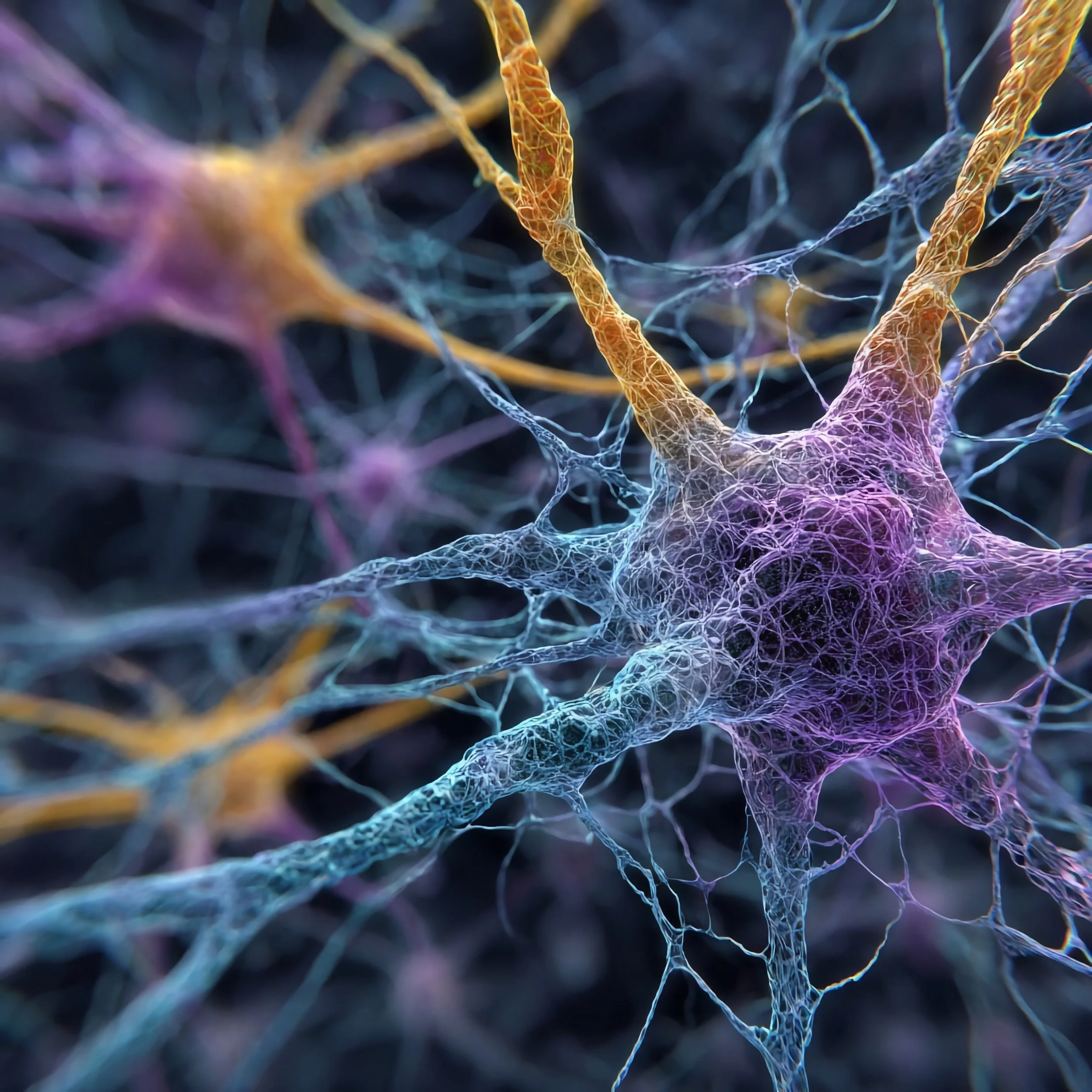
A neural network is a computer system inspired by the human brain, using interconnected neurons to learn from data and perform complex tasks.

Artificial superintelligence (ASI) can generally be described as a computer that has surpassed human intelligence in all areas.

Dive into Deep Reinforcement Learning: Understand how AI learns from mistakes to improve decisions in complex environments. Perfect for tech enthusiasts and professionals.

An Attention Mechanism is a neural network component that prioritizes relevant information in data, enhancing context understanding and model accuracy.

Deep learning is a branch of artificial intelligence that deals with the simulation of human intelligence by machines.

Unsupervised learning is a type of machine learning where the algorithm is trained on a dataset that does not have any labeled outcomes.

Python, a programming language developed in the 1980s, has emerged as a fundamental tool in the modern digital landscape.

Machine translation is a subfield of computational linguistics that uses software to translate text or speech from one language to another.


A recurrent neural network (RNN) is a type of neural network that is designed to handle sequences of data.

A key force behind the deep learning boom, best known for co creating AlexNet and demonstrating the power of neural networks at scale.

Pioneering figure in neural networks and deep learning, whose research transformed modern AI and inspired a new generation of scientists.

Ilya Sutskever is a pioneering AI researcher known for shaping deep learning and cofounding OpenAI.

A central figure in modern AI, known for driving rapid progress while pushing for responsible development and global access to powerful models.

Ashish Vaswani is a key figure in modern AI, best known for co-creating the Transformer, the architecture that unlocked today’s most powerful language models.

Yoshua Bengio is a leading figure in deep learning whose work has shaped modern AI and continues to guide breakthroughs across the field.

Alan Turing transformed computing and helped shape early AI through groundbreaking ideas in mathematics, cryptography, and machine intelligence.

A short tribute to Claude Shannon, celebrating his groundbreaking work that shaped modern information theory and set the foundation for digital communication and AI.

Marvin Minsky helped shape modern AI, exploring how machines might mirror human thought through simple interacting parts that form complex intelligence.

Demis Hassabis is a pioneering AI researcher and DeepMind cofounder, known for uniting neuroscience and computation to push the boundaries of artificial general intelligence.

Greg Brockman is a leading figure in AI, known for shaping transformative technologies and pushing the field toward a more capable and responsible future.

Yann LeCun is a key architect of deep learning, whose work on neural networks has driven major advances in modern artificial intelligence.

Boston Dynamics creates agile robots built for demanding real-world environments, highlighting advanced engineering and practical applications across industry and research.




This AI blog is written and designed by impressive AIs, and humans merely perform copy-and-paste operations. We showcase the progress of AI capabilities on all fronts (text, image, video, audio, design, technology, education, etc.). As of mid-2025, we are also using AI-enabled browsers like Perplexity’s Comet and OpenAI’s ChatGPT Atlas browser to help us.
In 2026, AI advantage will not come from tools but from focus. This piece outlines three concrete, disruptive moves businesses can make to turn AI into durable leverage, plus the contrarian and pessimistic views leaders should confront head-on.